Molar Dental Implants:
Replacing a Missing Back Tooth
Single tooth implants in Boynton Beach starting at $399.
At Florida Dental Implant Specialists in Boynton Beach, FL, we help patients throughout Palm Beach County restore their smiles with proven implant technology. Please call (561) 600-4747 if you have any question.

Not sure how to start?
Wondering if permanent teeth are right for you? Want to know more about the cost of whole treatment? Call to schedule a consultation and get your questions answered by our experienced team.
(561) 600-4747A molar dental implant replaces a missing back tooth without using the teeth beside it for support. The implant sits in your jawbone and holds a crown shaped to fit the gap and meet the opposing teeth when you chew.
Treatment starts with checking how the missing tooth affects your chewing and bite. Your dentist then assesses the available bone, nearby sinus or nerve, and space for the crown. Together, these findings determine whether an implant is suitable, whether additional procedures are needed, and how long treatment could take.
How a Back Tooth Implant Works
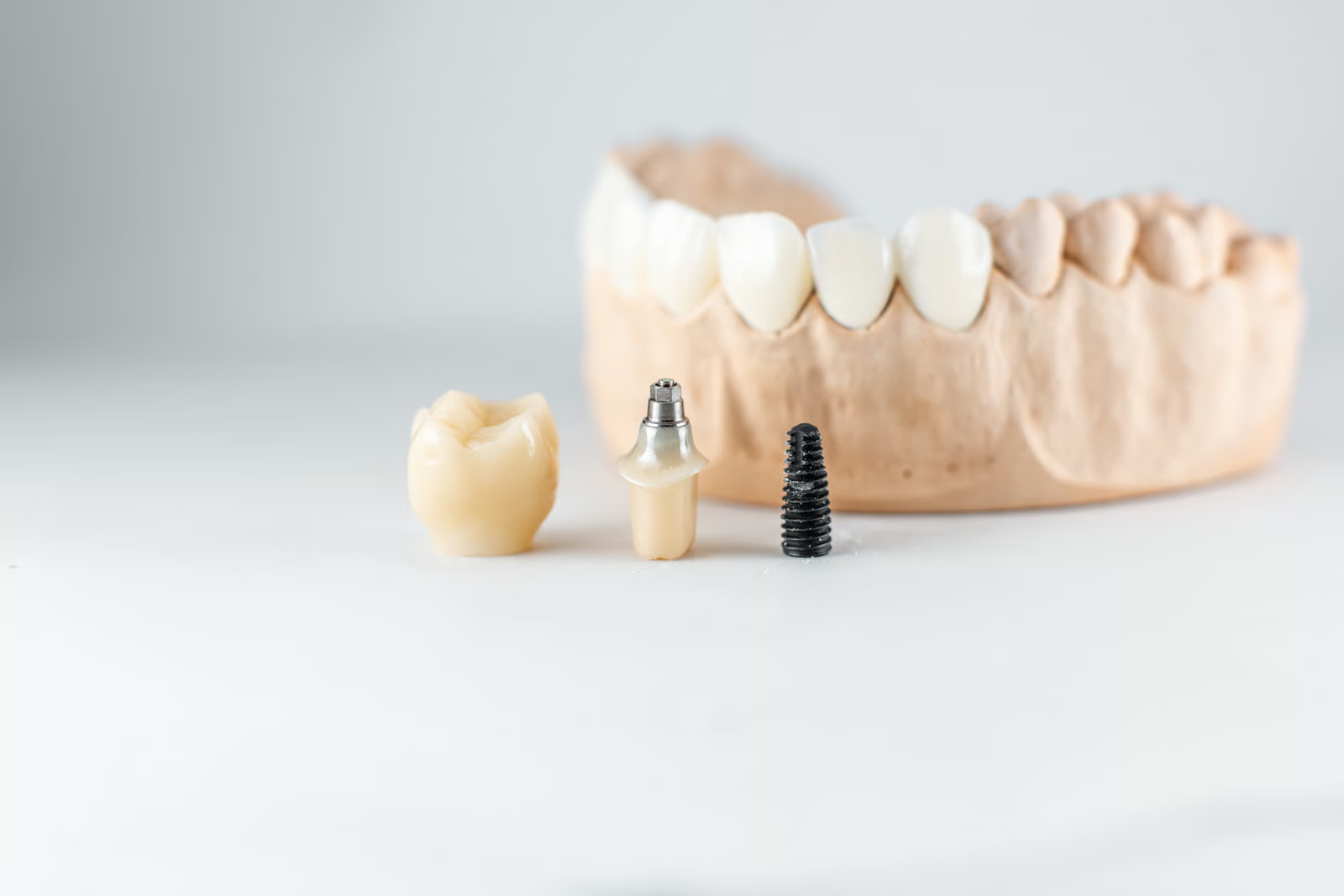
A single-tooth implant usually has three parts: the implant in your jawbone, a small connector called an abutment, and the crown you see and chew on. The implant takes the place of the missing roots and supports the crown.
At the back of your mouth, the replacement needs to handle chewing pressure within a relatively confined space. The crown must meet the opposing teeth comfortably, fit against any neighboring teeth, and leave enough room for cleaning.
The first molar, second molar, and wisdom tooth occupy different positions and do not have the same replacement needs:
| Tooth | Where It Sits | What It Means for Replacement |
|---|---|---|
| First molar | Behind the premolars, which sit between the canine and molars | Your dentist checks how losing it affects chewing and the support provided by your remaining teeth. |
| Second molar | Behind the first molar | Replacement depends on chewing comfort, the opposing tooth, and the rest of your bite. |
| Third molar, or wisdom tooth | Behind the second molar, when present | Wisdom teeth are not routinely replaced with implants. |
The last tooth you can see is not necessarily a wisdom tooth. Your dentist identifies the missing molar before recommending whether and how to replace it.
Do You Need to Replace a Missing Molar?
Not every missing molar needs replacement. Difficulty chewing, changes in your bite, and the condition of your remaining teeth help determine whether treatment would offer a practical benefit.
A missing second molar can sometimes be monitored if you chew comfortably and the rest of your bite remains functional. If you struggle with certain foods or avoid that side, replacement deserves consideration. Teeth near or opposite the gap can move over time, but significant bite problems are not inevitable.
An implant provides support without reshaping the adjacent teeth. A conventional bridge relies on supporting teeth, which generally need crowns. Choosing between an implant and a dental bridge involves checking whether those teeth are healthy, already crowned, or need restoration themselves.
A conventional bridge generally needs a supporting tooth on both sides of the gap, so it may not suit a missing molar at the very back. The available options should be compared around your tooth position, treatment needs, and preferences.
Upper Molar vs. Lower Molar Implants
Upper molar implants need to account for the sinus above the back teeth. Lower molar implants require careful planning around the nerve running through the jawbone.
In either jaw, the dentist also checks whether there is enough bone for the implant and enough space for the finished crown.
| Planning Point | Upper Molar Site | Lower Molar Site | Why It Matters |
|---|---|---|---|
| Nearby anatomy | The sinus sits above the back teeth. | A nerve runs through the lower jaw. | Imaging helps assess where an implant could be placed. |
| Available bone | Bone height and width may be reduced after tooth loss. | Bone height and width can also be reduced. | Additional preparation may be needed before placement. |
| Bite | The crown meets the lower teeth. | The crown meets the upper teeth. | The opposing teeth influence the crown’s shape and position. |
| Cleaning access | The back of the upper jaw can be difficult to reach. | The tongue and nearby teeth can affect access. | The finished crown needs to leave room for daily cleaning. |
Does an Upper Molar Implant Need a Sinus Lift?
Not always. A sinus lift may be recommended when there is insufficient bone beneath the sinus for the planned implant. The procedure creates space for additional bone in that area.
If the existing bone can support a suitable implant, a sinus lift may be unnecessary. Your scan and proposed implant position determine the recommendation; an upper molar does not automatically require this additional procedure.
What Affects Lower Molar Implant Placement?
The nerve’s position and the height, width, and shape of the surrounding bone determine the space available for a lower molar implant. Dense bone can still have limited room for placement.
Three-dimensional imaging shows details beneath the gums that cannot be judged by looking at the gap. Your dentist uses those findings to plan the implant’s position and discuss the risks relevant to your treatment.
Can You Get a Molar Implant Years After Extraction?
An implant may still be possible after several years. The assessment checks how much bone remains and whether neighboring or opposing teeth have moved into the space.
If there is insufficient bone, bone grafting may help prepare the area. Grafting can be performed separately or, in selected cases, alongside implant placement. It does not make every site suitable, so treatment depends on the examination and imaging rather than the time since extraction alone.
Molar Implants and Teeth Grinding
Grinding or clenching (bruxism) puts repeated pressure on teeth and restorations. Your dentist needs to account for that pressure when planning the molar crown and checking how it meets the opposing teeth.
Grinding can happen while you are awake or asleep, and you may not notice it. Worn teeth, recurring damage to crowns or fillings, and jaw muscle discomfort can help your dentist identify what needs investigating. None confirms grinding on its own.
Mention any history of:
- Chipped or broken crowns and fillings.
- Diagnosed grinding or clenching.
- Sore or tired jaw muscles on waking.
- Wearing a night guard.
Crown material and implant dimensions are considered alongside your bite. Neither a particular material nor a wider implant removes every risk associated with grinding.
Bring your existing night guard if you have one. Its fit may need adjustment or replacement after the crown is fitted. If a guard is recommended, its fit and condition should be checked during follow-up care.
What Does Molar Implant Treatment Involve?
Treatment usually includes an assessment, any necessary preparation, implant placement, healing, and fitting the crown. An existing gap and a tooth that still needs extraction have different starting points.
Checking the Tooth and Your Bite
Your dentist examines the gap or damaged molar, neighboring teeth, gums, and opposing teeth. Your medical history, medications, smoking history, and previous dental treatment also inform the plan.
If the molar is still present, the examination first establishes whether it can be saved. If extraction is recommended, the explanation should cover why the tooth cannot be predictably restored and how its removal would affect replacement.
Preparing the Area for an Implant
Imaging helps establish whether the bone can support the implant or whether grafting or sinus treatment is needed first. Active dental or gum problems also need to be addressed in the plan.
A recommendation for grafting should explain where bone is lacking, how that affects placement, and whether the procedure adds a separate healing stage. Knowing the purpose and timing of each procedure helps you understand the full course of treatment.
Placing the Implant and Allowing It to Heal
After placement, bone heals around the implant through a process called osseointegration. This can take several months or longer, depending on your health and the procedures involved.
Having a tooth extracted does not automatically mean you can have an implant placed the same day or receive a crown ready for chewing. If a temporary replacement is planned, your dentist should explain how you can use it while the area heals.
Fitting the Molar Crown
Once the implant is ready, the connector and crown are fitted. Your dentist checks the bite, the contact with neighboring teeth, and access for cleaning.
For work or travel arrangements, ask which visits involve surgery and when healing checks and crown appointments are expected. The overall treatment period includes time between appointments; recovery needs should be discussed separately for each surgical stage.
What Does a Molar Implant Cost?
The total cost includes the work needed to complete your replacement tooth. A placement fee may cover only the surgical stage, with the connector, crown, imaging, or preparatory procedures charged separately.
A written estimate should identify whether it includes:
- Assessment and imaging: The examination and scans used to plan treatment.
- Extraction: If the molar is still present and cannot be retained.
- Site preparation: Bone grafting or sinus treatment, when needed.
- Implant placement: The surgical procedure.
- Abutment and crown: The connector and finished replacement tooth.
- A temporary replacement: If one is part of the plan.
- Follow-up: Which reviews are included and how ongoing maintenance is charged.
Grafting, sinus treatment, and the restoration all affect the cost of implant treatment. Two people replacing the same molar may need different procedures and receive different estimates.
Compare quotes for the completed tooth, including the same preparatory work. A lower advertised price may refer to only one stage.
With dental implant financing, consider the full price alongside the monthly payment. Interest, the repayment period, and any upfront payment affect the amount paid overall. Eligibility and terms need to be checked before committing.
How Do You Clean a Molar Implant Crown?
Brush around the gumline and clean between the implant crown and neighboring teeth. Ask your dental team to demonstrate tools that fit the space and that you can comfortably reach to the back of your mouth.
The implant itself cannot develop tooth decay, but the surrounding gums and bone can develop disease. Daily cleaning and regular dental reviews remain important after treatment.
Your cleaning routine and follow-up schedule should account for any history of gum disease and difficulty reaching the crown. Persistent food trapping, bleeding, or discomfort during cleaning needs attention as part of maintaining healthy gums around the implant.
Immediately after surgery, follow the instructions for your healing site. Cleaning around a finished crown and caring for a newly placed implant require different routines.
For your molar implant assessment, bring any recent imaging, extraction records, previous estimates, and a night guard you currently wear. Describe any foods you struggle to chew or whether you now avoid eating on that side.
Frequently Asked Questions
Request Your Free Consultation
Our Difference
No referrals needed
Referrals and waiting
Years of expertise
Limited experience
Immediate functionality
Temporary solutions
Precision placement
Less accurate
Flexible financing
Unexpected costs
Warranty protection
No guarantees
Boynton Beach, FL 33472
Get Started with a Molar Dental Implant in Boynton Beach, FL
If you’re living with a missing tooth, a single tooth dental implant can permanently restore both function and confidence.
Contact Florida Dental Implant Specialists to schedule your consultation. We’ll evaluate your situation, answer questions, and create a customized treatment plan.
Our Palm Beach County dental office serving areas: